Un extracto del artículo "
Kids in India Are Sparking Urban Planning Changes by Mapping Slums" de
Sam Sturgis para CityLab
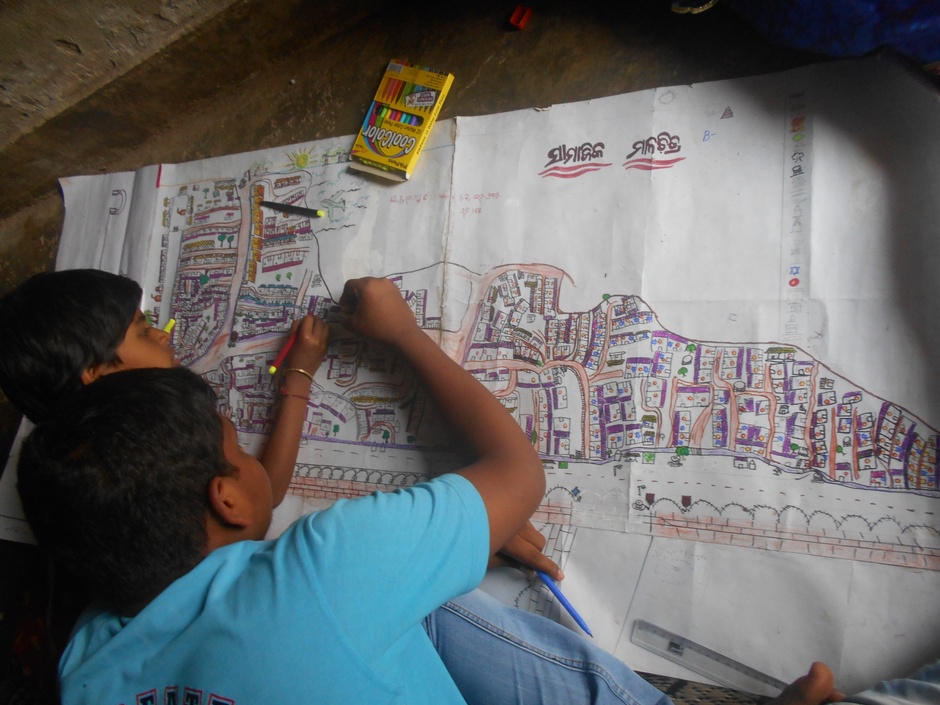
On many of the child maps, therefore, dots appear indicating where child-specific public toilets should go.
The
value of child-led mapping, however, is not restricted to dreaming of a
modern cricket pitch or other public utilities (although that's
evidently important). Generally speaking, people living in slums operate
on the peripheries of Indian society—geographically and
socio-economically. Exclusion is magnified even further when you're a
child.
Urban planning in India operates as a de-facto gerontocracy, I was told by Dharitri Patnaik, India representative of the Bernard van Leer Foundation,
which funds child-development programs. "Most of the time children are
never considered as citizens. They're considered as future citizens,"
Patnaik explains. By coming to the table with a surrogate development
proposal—the map—children demonstrate analytical capabilities. In turn,
government officials have to take them more seriously.
Yet, no one likes being told how to do their job, especially by
children. Won't urban-planning officials go on the defensive if their
work is so candidly indicted, with colored markers no less?

No hay comentarios:
Publicar un comentario